Oil Sands & Pipeline Telecom Systems in Calgary
Telecom, SCADA and safety systems for Western Canadian energy — engineered for extreme cold, long distances and sites a long way from anyone.
 Canada
Oil Sands & Pipeline Telecom Systems in Canada
Western Canadian energy operations are defined by two things that rarely apply together elsewhere: extreme cold and extreme distance. An oil sands facility or a compressor station may sit hours from the nearest town, on a network that runs for hundreds of kilometres, in an environment that spends part of every year well below the temperature at which ordinary industrial equipment is rated to start. Both facts push in the same direction. Cold narrows the equipment that is genuinely suitable — as opposed to nominally rated — and makes enclosure, heating and battery behaviour a first-order design concern rather than a detail. Distance makes every site visit expensive, which means remote monitoring has to be trusted and a failure that requires someone to drive out is a design failure, not just an incident. Exctel engineers for both.
The energy telecom landscape in Western Canada
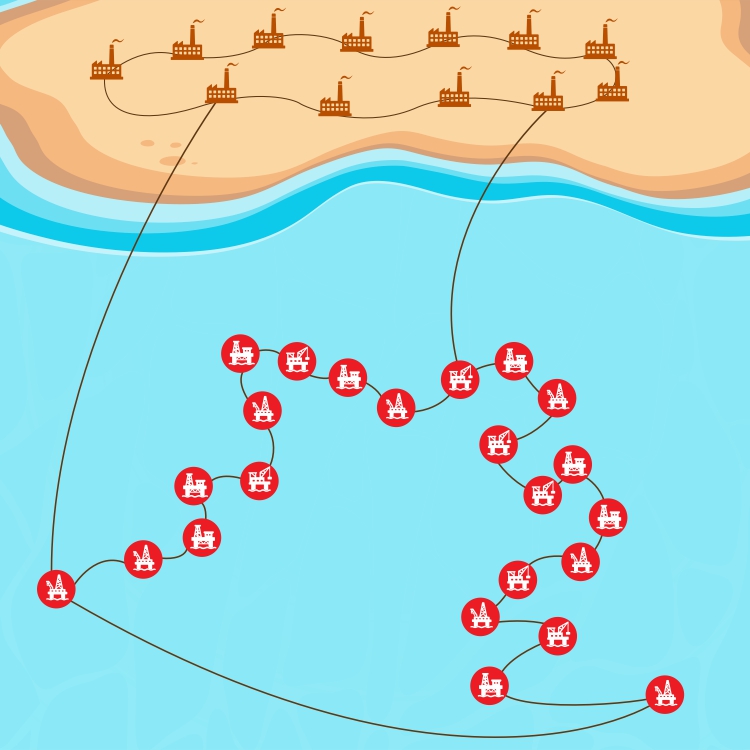
The Western Canadian sector spans oil sands mining and in-situ SAGD operations, conventional and unconventional gas production, gas processing plants, and one of the world’s most extensive pipeline networks — with Calgary serving as the commercial and engineering centre for most of it. Telecom scope follows that geography. Pipelines require SCADA and telemetry over long distances across terrain with limited infrastructure, using licensed radio, fibre, satellite and cellular in combination, engineered so that the loss of any one bearer does not blind the control centre. In-situ and wellpad operations depend on remote monitoring of sites that are normally unattended and awkward to reach. Facilities require the usual site systems — radio coverage, public address, emergency communications, CCTV, access control — but specified for a climate where winter temperatures fall far below standard industrial equipment ratings, so enclosure design, heating, condensation management and battery performance carry as much weight as the electronics inside. Hazardous-area classification follows the Canadian Electrical Code with its Class and Division system, which differs from the IEC Zone approach used across much of the world and must be reflected in equipment selection and documentation. Provincial regulation, pipeline standards and Indigenous consultation and participation requirements shape how projects are executed.
What we deliver in Canada
Integrated telecom, safety and control-system engineering aligned with Canada’s oil & gas operations.
A dependable telecom partner in Canada
Related projects
Representative programmes that demonstrate the same engineering and integration capability.

Oil Sands & Pipeline Telecom Systems in Canada — questions answered
Direct answers to common questions from project and procurement teams.
What telecom services does Exctel provide for Western Canadian operations?
Exctel provides pipeline SCADA and telemetry design, licensed radio, fibre, satellite and cellular bearer engineering, remote site connectivity, PA/GA and emergency communications, CCTV and access control, OT network segmentation, and the surveys and studies behind upgrade planning across distributed assets.
How does extreme cold change telecom design?
It narrows the equipment that is genuinely suitable rather than nominally rated. Start-up behaviour at low temperature, enclosure heating, condensation as equipment cycles, cable and connector flexibility, and battery capacity loss all become design decisions. Equipment that performs well in a temperate installation can fail on the coldest morning of the year, which is exactly when it is needed.
How does Exctel engineer telemetry across long pipeline routes?
By combining bearers rather than depending on one. Licensed radio, fibre, satellite and cellular each fail differently, so the design uses them in combination with defined failover so no single loss blinds the control centre — supported by path surveys and availability analysis rather than assumption, since remedying a weak path later means mobilising to remote terrain.
Does Exctel work to Canadian Class and Division requirements?
Yes. Canada classifies hazardous locations using the Class and Division system under the Canadian Electrical Code rather than the IEC Zone approach common elsewhere, which affects equipment selection, certification and documentation. Exctel has engineered to both frameworks and can carry a design between them where a project or specification originates in another region.
Why choose Exctel for oil sands and pipeline telecom in Calgary?
Exctel brings 25+ years of international oil & gas telecom and SCADA experience, design discipline for remote unattended sites where a site visit is costly, multi-bearer network engineering, cold and harsh environment equipment experience, and vendor independence — so a distributed network is built around the requirement rather than a single supplier’s ecosystem.
Industries we serve here
Other locations we serve
Planning oil sands & pipeline telecom systems in Canada?
From feasibility to commissioning, our engineers are ready to help you deliver safe, connected and future-ready infrastructure.